

Complications of Autosomal Dominant Polycystic Kidney Disease in Pediatrics: A Twenty-Five-Year Experience
DOI:
https://doi.org/10.14740/ijcp1041Keywords:
Children, Hypertension, Pediatric nephrology, Polycystic kidney disease, Renal cystsAbstract
Background: Autosomal dominant polycystic kidney disease (ADPKD) is a systemic ciliopathy caused by pathogenic variants in PKD1 or PKD2, predominantly affecting the kidneys. Although traditionally considered as an adult-onset condition, ADPKD may present during childhood, with early manifestations such as proteinuria and hypertension. However, predictors of early complications in pediatric ADPKD remain limited. This study aimed to characterize the clinical manifestations of pediatric ADPKD and to explore potential early predictors of disease-related complications.
Methods: We conducted a retrospective descriptive study of pediatric patients (< 18 years) with ADPKD followed at a tertiary center between 1999 and 2024. Clinical data included demographics, family history, estimated glomerular filtration rate (eGFR), ultrasonographic parameters, and ADPKD-related complications, according to Kidney Disease: Improving Global Outcomes (KDIGO) 2025 guidance.
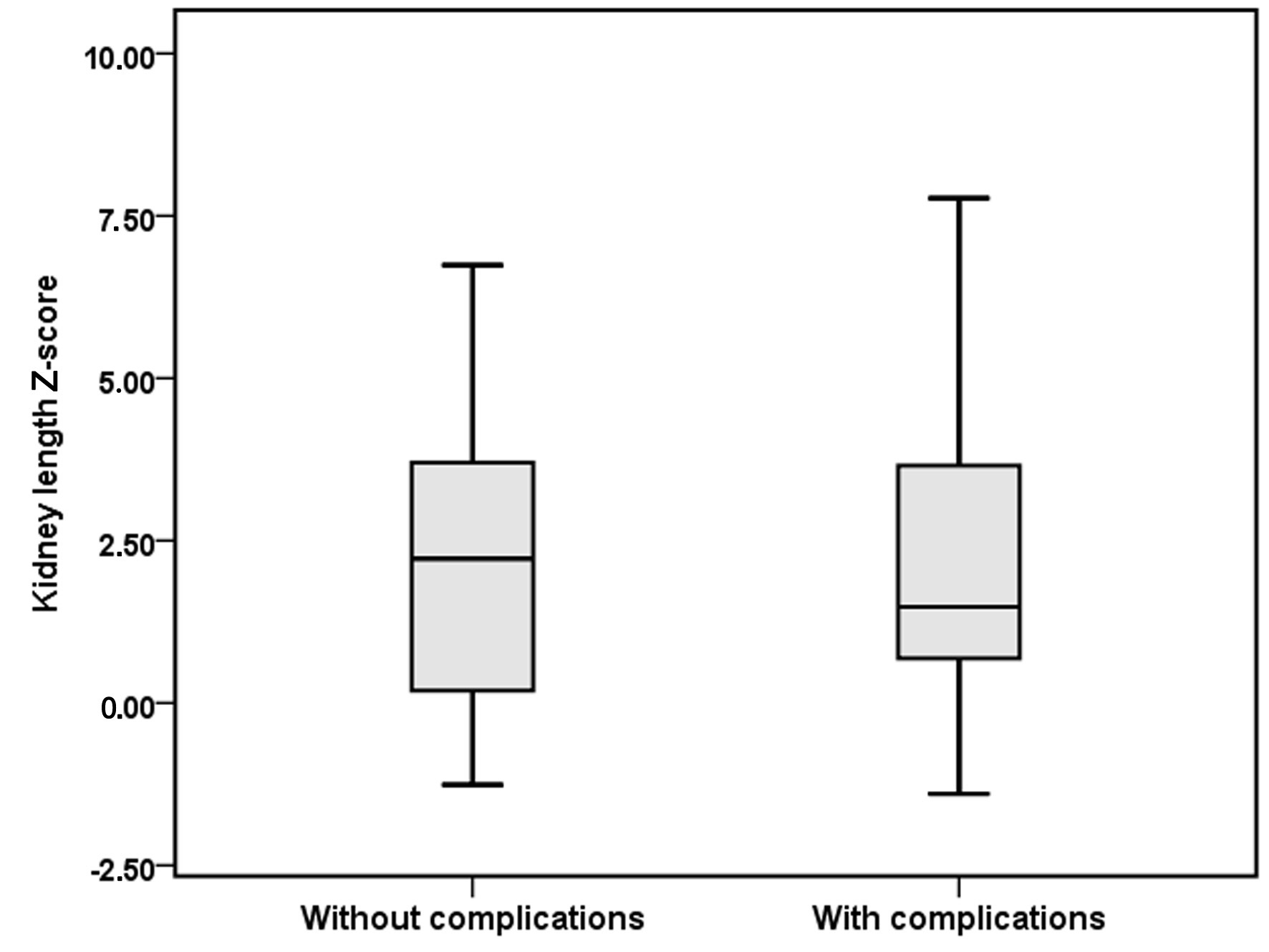
Results: Sixty-seven children were included (52.2% male), with a mean age at first evaluation of 7.4 ± 5.5 years. Twelve patients (17.9%) were diagnosed before 2 years of age, and prenatal renal cystic abnormalities were documented in six (9.0%). Family history was present in 97.0%. The mean kidney length Z-score was 1.94 ± 2.43; 59.7% had ≥ 10 cysts, and 41.8% had Bosniak category II or higher. Mean eGFR was 97.9 ± 15.1 mL/min/1.73 m2, and 22.2% had chronic kidney disease stage II. During follow-up (mean 4.0 ± 4.3 years), 27.9% developed complications, most commonly urinary tract infections, proteinuria, and hypertension. Complications were more frequent in females, while males had lower eGFR. No associations were found between complications and imaging parameters.
Conclusions: ADPKD is associated with a substantial burden of complications in childhood. In the absence of validated prognostic markers or disease-modifying therapies for pediatric patients, early recognition and structured follow-up remain essential.
Published
Issue
Section
License
Copyright (c) 2026 The authors

This work is licensed under a Creative Commons Attribution 4.0 International License.