

Associated Arthropathies in Pediatric Endocrine Disorders: A Systematic Review and Narrative Synthesis
DOI:
https://doi.org/10.14740/ijcp1044Keywords:
Pediatric endocrinology, Arthropathy, Limited joint mobility, Slipped capital femoral epiphysis, Growth hormone disorders, Systematic reviewAbstract
Background: Endocrine disorders in children and adolescents frequently involve the musculoskeletal system, producing characteristic arthropathies that may precede the diagnosis of the underlying hormonal disease. These manifestations are often overlooked despite their diagnostic value and potential reversibility with timely treatment. Improved recognition of endocrine-related arthropathy is essential to optimize diagnosis, management, and long-term functional outcomes. The objectives of the study were to summarize the spectrum and prevalence of arthropathy in pediatric endocrine disorders, evaluate their diagnostic and pathophysiological significance, and discuss management strategies and prognosis.
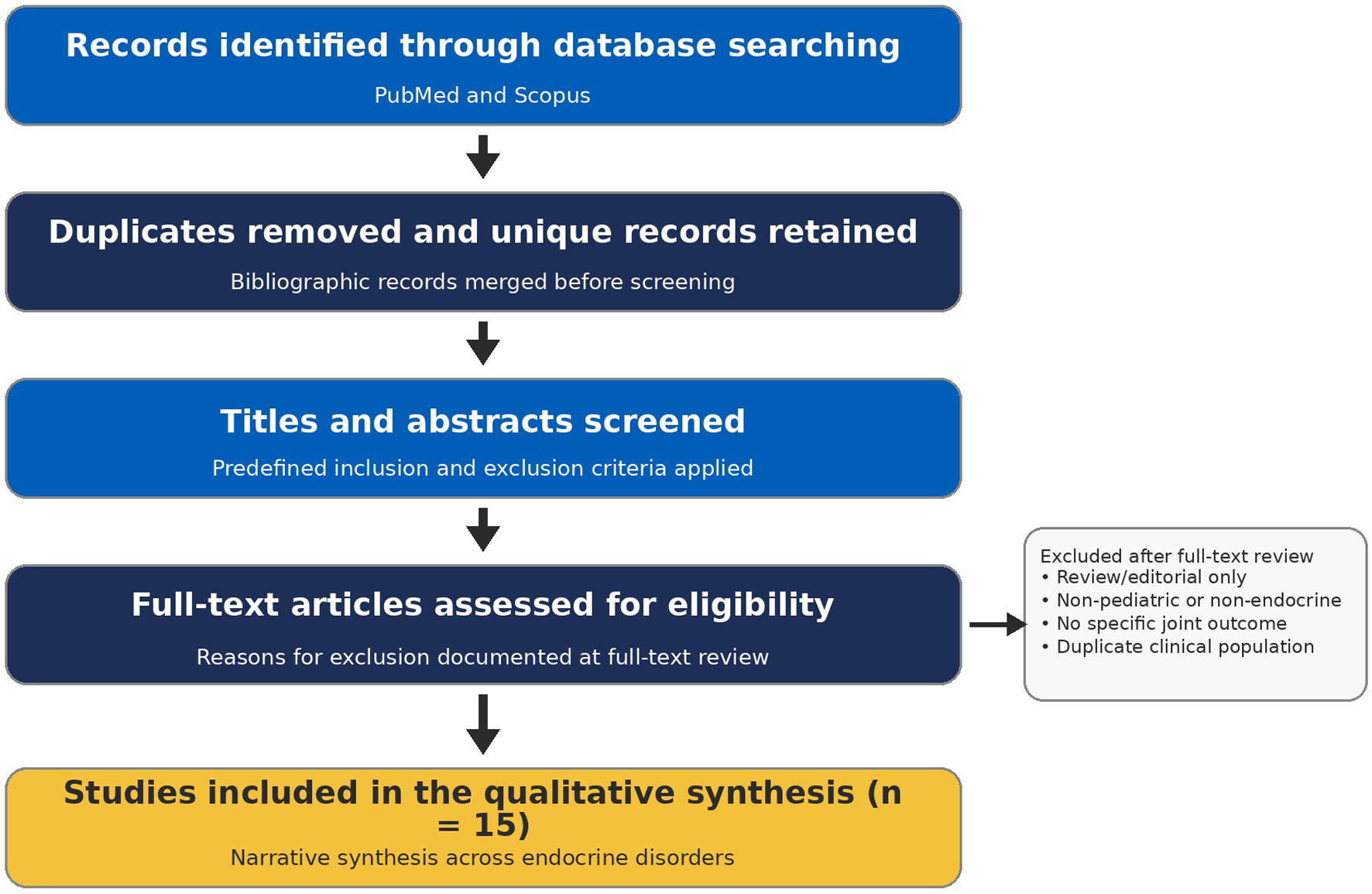
Methods: A systematic search of PubMed and Scopus was conducted from database inception through January 1, 2026 using combinations of endocrine terms (type 1 diabetes, thyroid disorders, growth hormone (GH) disorders, Cushing syndrome, hyperparathyroidism, and pseudohypoparathyroidism) and musculoskeletal terms (arthropathy, limited joint mobility, joint stiffness, slipped capital femoral epiphysis (SCFE), bone pain, and fractures). Titles, abstracts, and full texts were screened independently by two reviewers according to predefined criteria, and the study-selection pathway was summarized in a PRISMA-style flow diagram. Pediatric studies were prioritized; selected mixed-age cohorts were retained only when they included adolescents or informed rare pediatric phenotypes. Methodological quality was assessed using Cochrane risk-of-bias principles adapted for mixed study designs, supplemented by the Newcastle–Ottawa Scale for observational studies. Because of substantial heterogeneity, a narrative synthesis was performed.
Results: Fifteen studies were included. Diabetic arthropathy, usually presenting as limited joint mobility (cheiroarthropathy), was the most common finding, affecting up to 30% of children in earlier cohorts but generally < 10% in contemporary populations with improved glycemic control; it correlated with disease duration and microvascular complications. Thyroid disorders showed variable joint involvement: hypothyroidism was associated with arthralgia, non-inflammatory effusions, epiphyseal dysgenesis, and atypical SCFE, whereas Graves disease rarely caused thyroid acropachy or antithyroid drug–related arthritis. GH excess was associated with acromegalic arthropathy involving the hands, spine, and large joints, although prevalence estimates of 70–75% derive mainly from mixed-age cohorts that included adolescents rather than pediatric-only series. In contrast, GH deficiency and hypothyroidism were overrepresented among children with atypical or early-onset SCFE. Pediatric Cushing syndrome was characterized mainly by bone fragility, vertebral fractures, and reduced mobility rather than inflammatory arthritis. Primary hyperparathyroidism caused bone and joint pain with fractures, while pseudohypoparathyroidism was associated with growth-plate abnormalities and occasional SCFE. Across disorders, early endocrine treatment usually stabilized or improved musculoskeletal manifestations.
Conclusions: Arthropathy in pediatric endocrine disorders encompasses a broad, disorder-specific spectrum with important diagnostic and prognostic implications. Early recognition and treatment of the underlying endocrinopathy can prevent or reverse many joint complications, whereas delayed diagnosis may lead to permanent musculoskeletal disability. Multidisciplinary management is essential to optimize long-term outcomes.
Published
Issue
Section
License
Copyright (c) 2026 The authors

This work is licensed under a Creative Commons Attribution 4.0 International License.