International Journal of Clinical Pediatrics, ISSN 1927-1255 print, 1927-1263 online, Open Access
Article copyright, the authors; Journal compilation copyright, Int J Clin Pediatr and Elmer Press Inc
Journal website https://ijcp.elmerpub.com

Review

Volume 15, Number 2, June 2026, pages 37-50


Wearable Devices in Pediatric Obesity: A Comprehensive Review of Current Applications and Future Directions

Figures

↓  Figure 1. Classification and clinical applications of wearable devices in pediatric obesity management. This figure illustrates the four main categories of wearable devices used in pediatric obesity research and clinical practice. The top panel shows device classification: 1) motion-based devices including pedometers, accelerometers (ActiGraph), consumer trackers (Fitbit, Garmin), and wristband activity monitors, which measure steps per day, distance traveled, active minutes, MVPA duration, energy expenditure estimate, and sedentary time; 2) metabolic monitors including continuous glucose monitors (FreeStyle Libre, Dexcom), real-time CGM (RT-CGM), and flash glucose monitoring, which measure interstitial glucose levels, TIR, time above/below range, glycemic variability, glucose excursions, and coefficient of variation; 3) cardiac monitors including smartwatches with PPG sensors (Apple Watch, Samsung Galaxy), Polar HR monitors, and chest strap monitors, which measure HR (beats per minute), HR variability, resting HR, exercise intensity zones, cardio fitness score, and recovery metrics; 4) multi-sensor devices including SenseWear armband, ActiHeart, wearable cameras, and smart clothing/textiles, which combine accelerometry with HR, heat flux, galvanic skin response, skin temperature, sleep stages, and dietary imaging. The lower panel depicts clinical applications across three domains: 1) assessment tools (baseline evaluation including objective physical activity measurement, sedentary behavior quantification, and sleep pattern characterization; ongoing monitoring including treatment response tracking, adherence to activity goals, and real-world behavior patterns; research applications including intervention effectiveness studies, environmental factor associations, and population-level surveillance); 2) intervention components (behavioral mechanisms including self-monitoring and awareness, goal-setting and tracking, real-time feedback, and positive reinforcement; engagement features including gamification elements, social connectivity/challenges, visual progress displays, and achievement rewards; clinical integration including remote monitoring by providers); and 3) measured outcomes (anthropometric changes including BMI, BMI z-score, body fat percentage, body weight, and waist circumference; behavioral outcomes including physical activity levels, sedentary behavior reduction, and dietary awareness/modification; psychosocial outcomes including motivation and self-efficacy). MVPA: moderate-to-vigorous physical activity; PPG: photoplethysmography; TIR: time in range; HR: heart rate; BMI: body mass index.
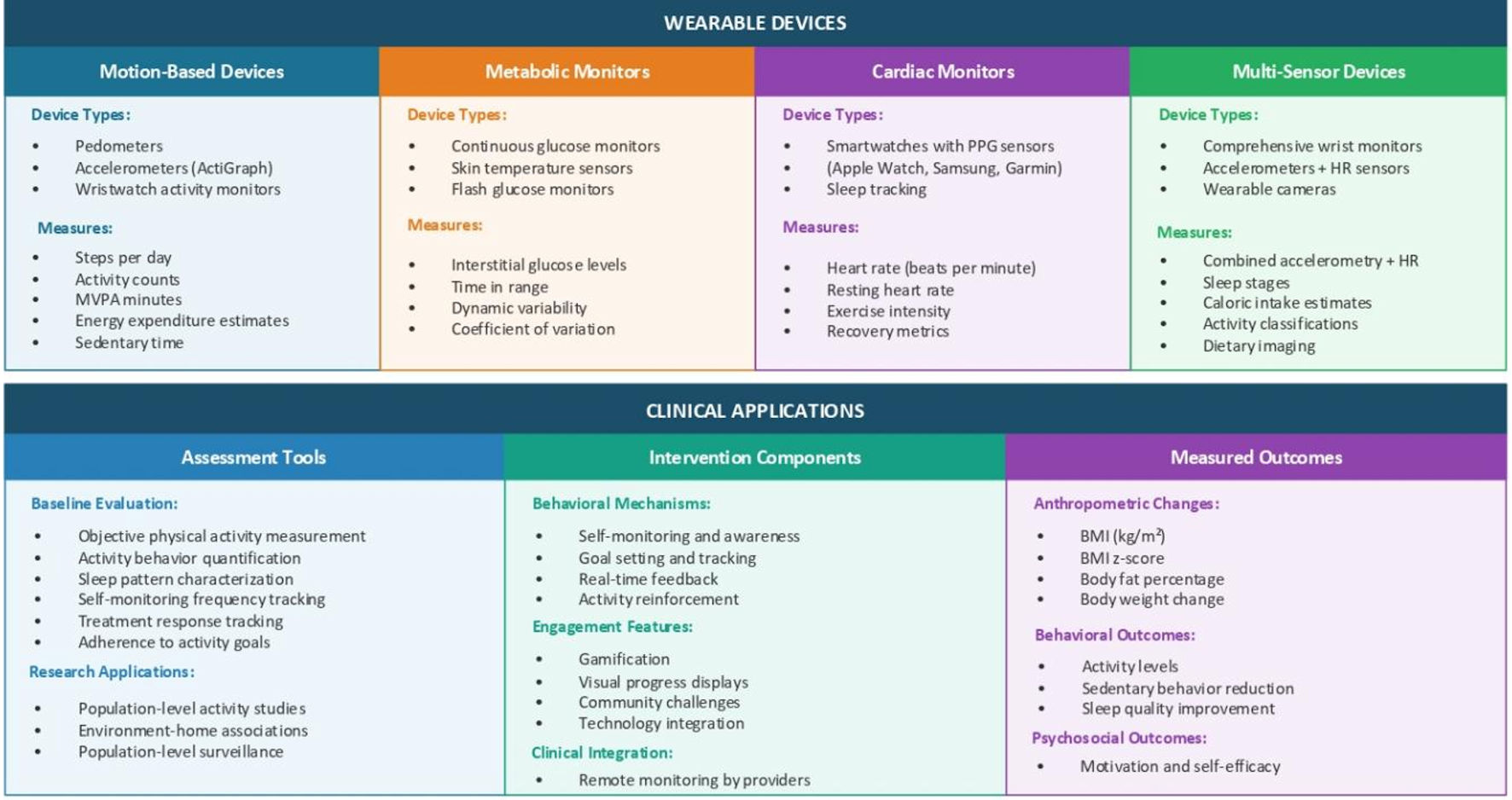
Figure 1.
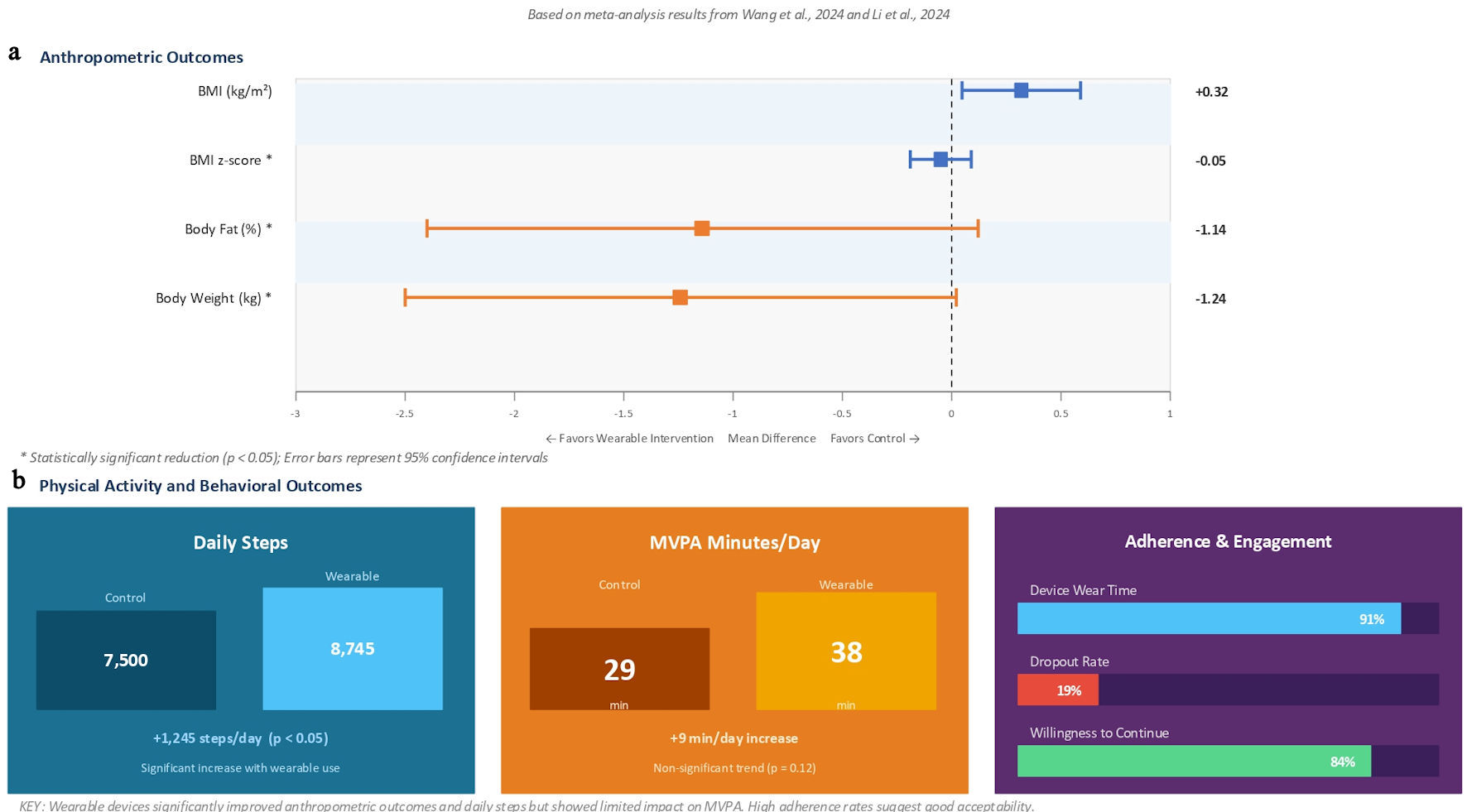
↓  Figure 2. Summary of effective evidence for wearable devices in pediatric obesity. This figure summarizes meta-analysis results demonstrating the effectiveness of wearable device interventions across multiple outcome domains. (a) Anthropometric outcomes showing mean differences favoring wearable device interventions compared to controls. BMI decreased by 0.50 kg/m2 (95% CI, –0.90 to –0.11; P = 0.01), BMI z-score decreased by 0.05 (95% CI, –0.09 to –0.01; P = 0.03), body fat percentage decreased by 1.14% (95% CI, –2.17% to –0.11%, P = 0.03), and body weight decreased by 1.26 kg (95% CI, –2.32 to –0.20 kg; P = 0.02). All outcomes showed statistically significant improvements (P < 0.05) with error bars representing 95% CIs. (b) Physical activity and behavioral outcomes. Daily step count increased significantly by 1,205 steps per day (95% CI, 626 to 1,784 steps; P < 0.001) comparing wearable device users to controls, demonstrating robust effects on ambulatory physical activity. However, MVPA minutes per day showed only a non-significant increase of 3 min (P = 0.08), indicating that more research is needed to understand impacts on MVPA specifically. Adherence and engagement metrics demonstrated favorable patterns: device wear time averaged 91% of days, dropout rate was 19%, and 85% of participants reported willingness to continue using devices after study completion, suggesting high acceptability and feasibility in pediatric populations (based on meta-analysis results from Wang et al, 2022 [6] and Au et al, 2024 [29]). BMI: body mass index; CI: confidence interval; MVPA: moderate-to-vigorous physical activity.
Figure 2.

Tables

↓  Table 1. Summary of Key Randomized Controlled Trials and Systematic Reviews on Wearable Devices in Pediatric Obesity
 
CategoryStudyStudy designPopulationDevice type(s)Intervention durationPrimary outcomesKey findings
This table highlights study designs, device types, intervention durations, measured outcomes, and key findings across accelerometers, activity trackers, CGM devices, and digital coaching programs. Note: Studies represent a selection of key publications demonstrating the range of wearable device applications in pediatric obesity. Effect sizes should be interpreted in context of study quality, population characteristics, and intervention components. RCT: randomized controlled trial; BMI: body mass index; BMI-Z: BMI z-score; MD: mean difference; MVPA: moderate-to-vigorous physical activity; CGM: continuous glucose monitor; WC: waist circumference.
Systematic reviews/meta-analysesWang et al, 2022 [6]Systematic review and meta-analysis12 RCTs, n = 3,227, ages 6–18 yearsPedometers (7 studies), wristband trackers (5 studies)2.5–18 months (mean: 6.2 months)BMI, BMI-Z, body fat %, body weight, waist circumferenceSignificant reductions in BMI (–0.50), BMI-Z (–0.05), body fat % (–1.14%), and weight (–1.26 kg). No effect on WC
Au et al, 2024 [29]Systematic review and meta-analysis31 studies, n = 6,329, children and adolescentsActivity trackers (consumer-grade and research-grade)Variable (2–52 weeks)Daily steps, MVPA, sedentary behavior+ 1,205 steps/day; no significant MVPA increase. Effect moderated by behavioral components + duration.
Dankovic et al, 2023 [30]Systematic review53 studies, n = about 15,000, children and adolescentsVarious commercial wearables (Fitbit, Garmin, smartwatches)VariablePhysical activity, health outcomes, feasibility75% found devices convenient; gamification improved engagement; parental support crucial for younger ages.
Kalantar et al, 2025 [36]Systematic review and meta-analysis10 clinical trialsmHealth interventions including wearable devicesVariableBMI, adiposity, behavioral and psychosocial outcomesPromising outcomes; high heterogeneity limits firm conclusions.
Clinical trials/intervention studiesCummings et al, 2022 [31]Open trialN = 26, ages 13–18 years with overweight/obesityFitbit + text-based health coaching12 weeksDaily active minutes, step count, BMI, adherenceSignificant increase in daily steps and active minutes. 91% wear adherence; 85% wished to continue device use.
Ridgers et al, 2016 [34]Cluster RCTN = 396 adolescents, ages 12–14 yearsFitbit Flex 2 + digital behavior change resources8 monthsPhysical activity (accelerometer-measured), BMINo MVPA difference; device alone insufficient without strong behavioral components.
Chimatapu et al, 2025 [19]Within-participant crossover feasibility studyN = 12, ages 10–18 years with obesity (BMI > 95%)Continuous glucose monitor (Dexcom G6)6 weeks (3 weeks masked + 3 weeks unmasked)Feasibility (recruitment, retention, adherence), glucose variability, dietary intake88% positive feedback; unmasked CGM improved dietary awareness. No glucose metric changes due to short duration.
Vidmar et al, 2021 [20]Pilot intervention studyAdolescents with obesityContinuous glucose monitor12 weeksGlucose variability, time in range, dietary behaviorsTime-restricted eating + CGM decreased glycemic peaks and TAR (P < 0.03).
Observational device accuracy studiesRobertson et al, 2011 [33]Feasibility study nested within obesity treatment RCTN = 28, ages 7–13 yearsActiGraph GT1M accelerometer9 months (baseline, 3-month, 9-month assessments)Feasibility of accelerometer use, MVPA> 90% provided ≥ 4 days data, about 50% provided 7 days. Challenges: discomfort, social stigma, loss/breakage.
Simunovic et al, 2024 [21]Narrative reviewChildren and adolescents with obesityContinuous glucose monitors (various manufacturers)1–14 days in observational studies; 12–13 weeks in intervention studiesSafety, feasibility, glucose metabolism characterizationCGM safe; no major adverse events; 88% positive user feedback; useful for prediabetes detection + behavior change.


↓  Table 2. Advantages, Limitations, and Clinical Considerations for Different Types of Wearable Devices in Pediatric Obesity
 
CategoryDevice categorySpecific examplesPrimary advantagesKey limitationsClinical considerationsEstimated cost range
Table shows advantages, limitations, and clinical considerations for major categories of wearable devices used in pediatric obesity management, including pedometers, accelerometers, consumer trackers, smartwatches, CGMs, HR monitors, and multi-sensor devices. Estimated cost ranges are also included. Notes: 1) cost ranges represent approximate retail prices and may vary by region, promotions, and insurance coverage; 2) device selection should be individualized based on treatment goals, family resources, child preferences, and clinical context; 3) insurance coverage for wearables in pediatric obesity treatment varies, with CGM typically requiring a diabetes diagnosis for coverage; and 4) hybrid approaches (e.g., combining simple pedometers with periodic accelerometer assessments) may help balance cost and data quality. MVPA: moderate-to-vigorous physical activity; GPS: global positioning system; HR: heart rate; CGM: continuous glucose monitor.
Basic activity measurement devicesPedometersYamax Digiwalker, Omron, basic step countersLow-cost, simple, long battery life, good for steps, no smartphone needed, child-friendlyOnly steps, no intensity distinguishing, no data storage, easily lost/brokenGood for basic activity awareness, best for younger kids, set age-appropriate step goals$10–30
Research-grade accelerometersActiGraph GT3X/GT3X+, GENEActiv, ActicalHigh accuracy, validated pediatric cut-points, raw data, water-resistantNo real-time feedback, costly, may cause stigma, requires softwareIdeal for research + baseline assessment, wrist-worn improves adherence, allows child to see data periodically$200–400 per device
Consumer activity trackersFitbit (Zip, Flex, Charge, Inspire), Garmin vivofit series, Xiaomi Mi BandReal-time feedback, goals, gamification, sleep tracking, appealingVariable accuracy, requires smartphone, privacy concerns, proprietary algorithms, may not fit larger body sizes, may underestimate MVPAGreat for engagement; verify band sizing, review data in clinic, encourage family participation$30–150
Advanced physiological monitoring devicesSmartwatchesApple Watch, Samsung Galaxy Watch, Garmin Forerunner seriesMulti-sensor, HR + GPS, notifications, high adolescent appeal, sleep tracking, water-resistantHigh cost, daily charging, HR accuracy varies, distraction risk, shorter battery lifeBest for older teens, assess tech comfort, enable parental controls, sports-oriented youth$150–400
Continuous glucose monitorsFreeStyle Libre (Abbott), Dexcom G6/G7, Guardian Connect (Medtronic)Real-time glucose, dietary behavior feedback, detects variabilityPrescription required, higher cost, skin irritation, 7–14 day replacements, learning curveBest for severe obesity/metabolic risk, short trials useful, combined with nutrition counseling$70–150/month (without insurance)
Multi-sensor devicesSenseWear armband, ActiHeartMost accurate for energy expenditure, comprehensive physiology, 24-h wear capabilityHigh cost, bulky, limited real-time feedback, less appealing/more conspicuous, discontinued in some casesBest for research/metabolic assessment, explain purpose to families, consider skin sensitivity$300–600
Metabolic monitoring devicesHR monitorsPolar H10, Wahoo TICKR, Garmin chest strapsHighly accurate HR; long battery life; good for structured exercise, water-resistantChest straps uncomfortable, smartphone-dependent, limited casual use, may feel stigmatizing for some hygiene considerationsUseful in supervised exercise programs, teach intensity zones, maintain hygiene, consider wrist-based HR as alternative$40–100


↓  Table 3. Age-Specific Recommendations
 
Age groupRecommended device typesRationale
Privacy policies and data security should be reviewed before recommending any device, particularly for minors. CGM: continuous glucose monitor
Preschool (2–5 years)Simple pedometers with clip, wrist-worn basic trackersNeeds parental help; focus on play-based activity; durability important
Elementary (6–10 years)Pedometers, Fitbit Ace/vivofit jr series, basic wristbandsGrowing independence; gamification appeals; parental monitoring still important; colorful designs preferred
Middle school (11–14 years)Consumer trackers (Fitbit Inspire/Charge, Mi Band), entry-level smartwatchesPeer acceptance critical; social features motivating; transitioning to more autonomy; cost-conscious
High school (15–18 years)Smartwatches, advanced trackers, CGM (if indicated)Adult-like features; aesthetic preferences; greater self-management; willingness to engage with data