Figures
↓ Figure 1. Relationship between kidney length Z-score and the presence of ADPKD-related complications in children with ADPKD. Box-and-whisker plot showing the distribution of kidney length Z-scores in patients with and without complications. ADPKD: autosomal dominant polycystic kidney disease.
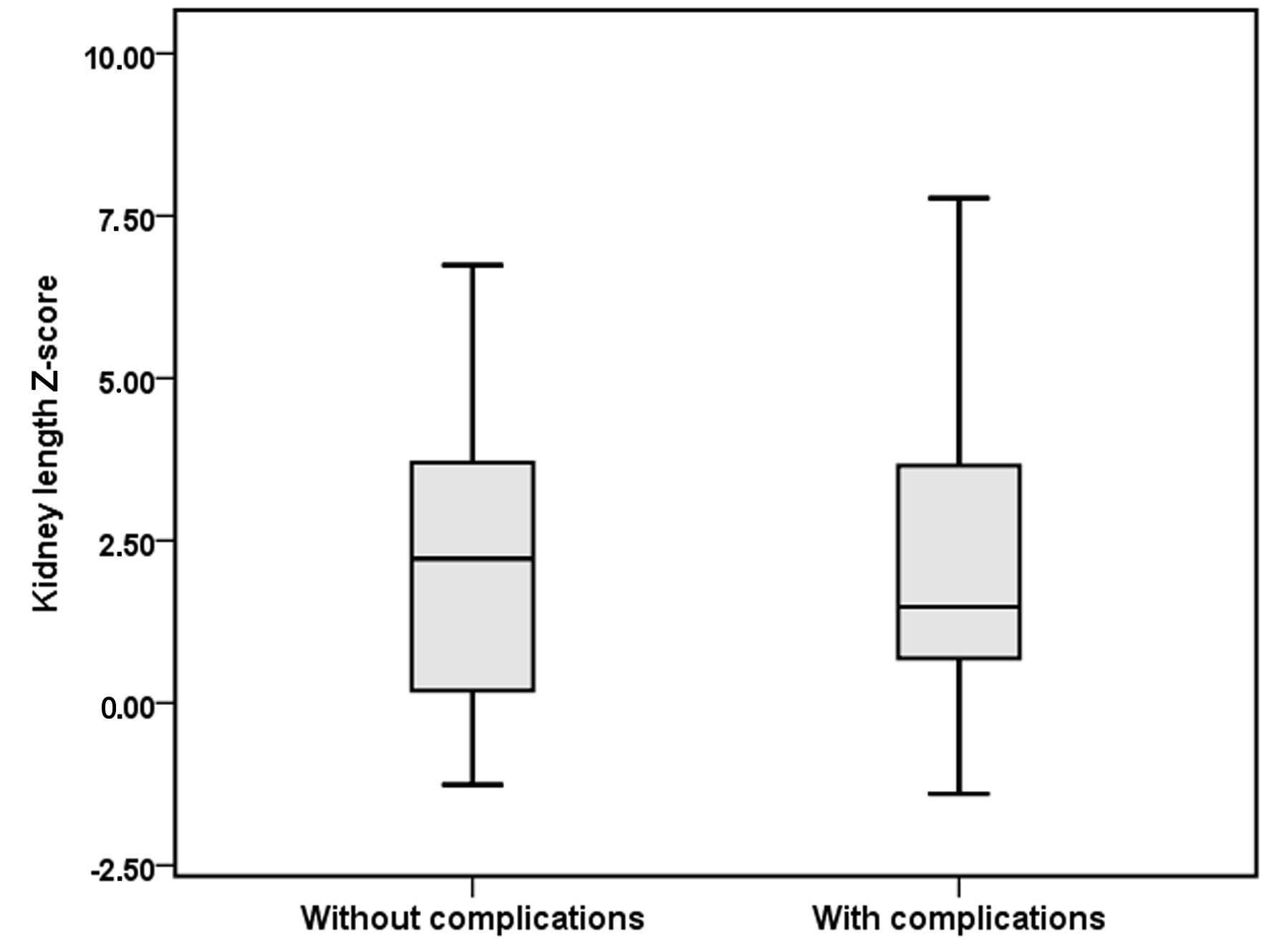
↓ Figure 2. Relationship between kidney length Z-score and estimated glomerular filtration rate (eGFR) in children with ADPKD. Scatter plot illustrating eGFR values across kidney length Z-scores in the study cohort. ADPKD: autosomal dominant polycystic kidney disease.
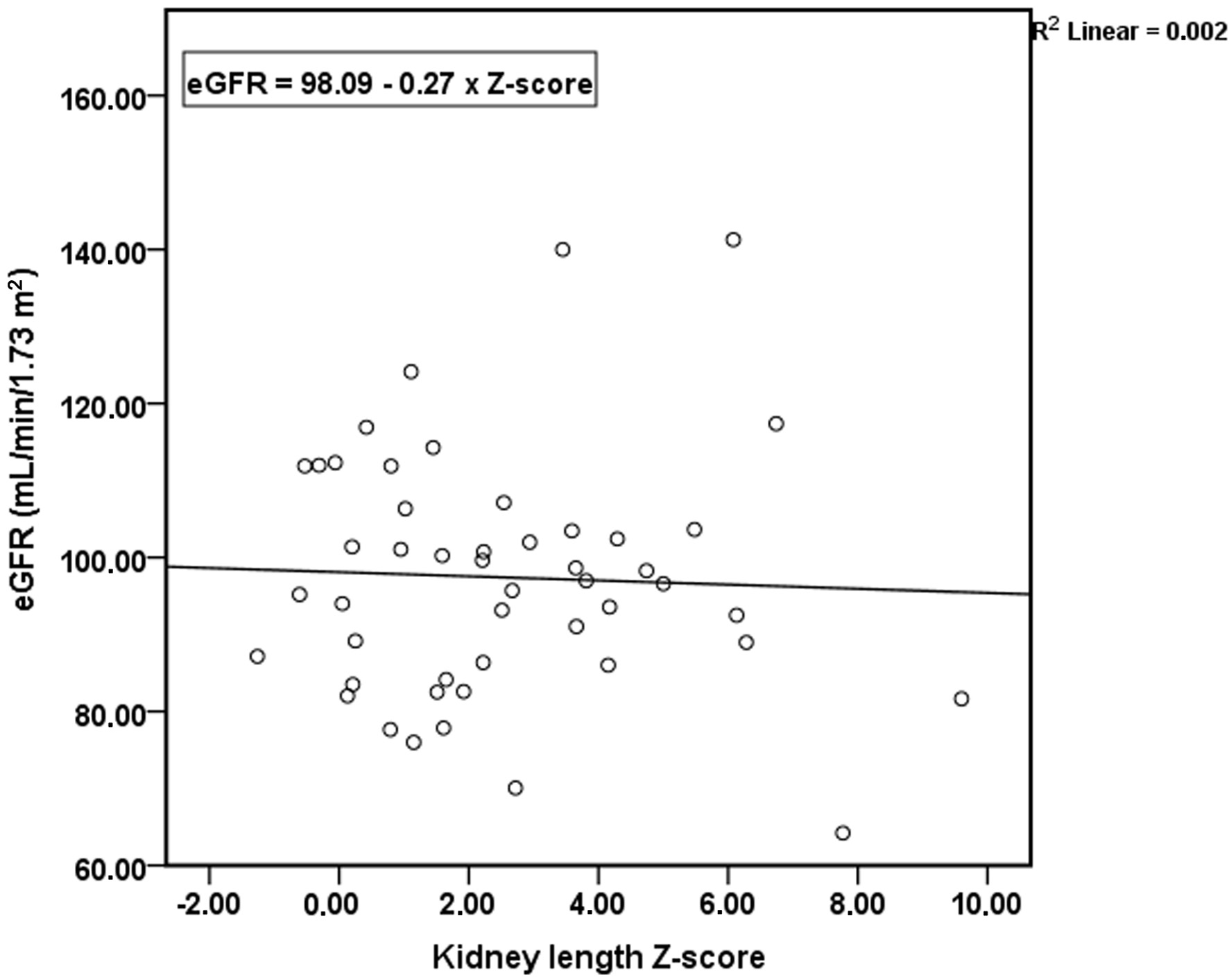
↓ Figure 3. Relationship between age and estimated glomerular filtration rate (eGFR) in children with ADPKD. Scatter plot with linear regression showing the association between age and eGFR. ADPKD: autosomal dominant polycystic kidney disease.
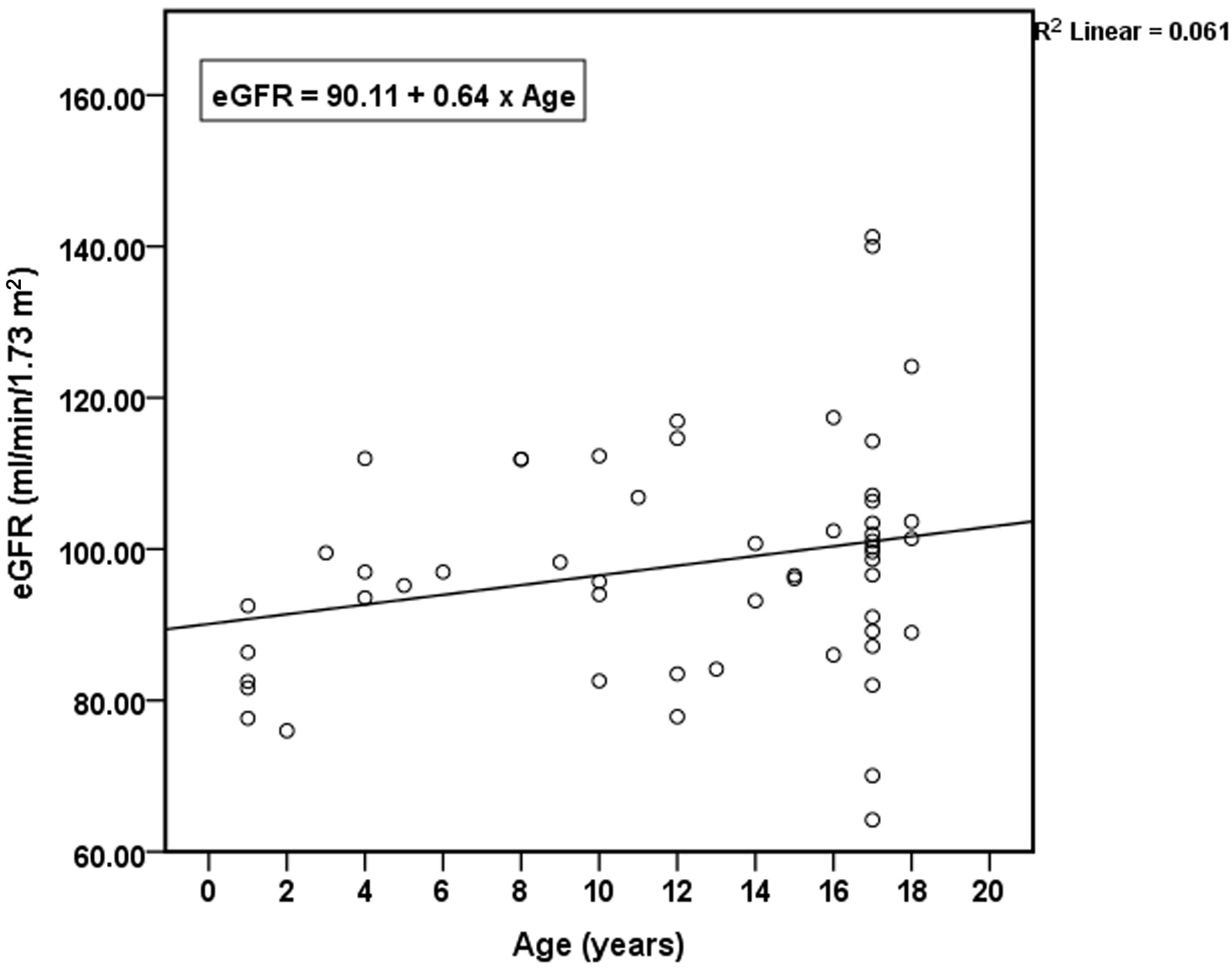
↓ Figure 4. Relationship between largest cyst dimension and the presence of ADPKD-related complications in children with ADPKD. Box-and-whisker plot showing the distribution of largest cyst dimensions in patients with and without complications. ADPKD: autosomal dominant polycystic kidney disease.
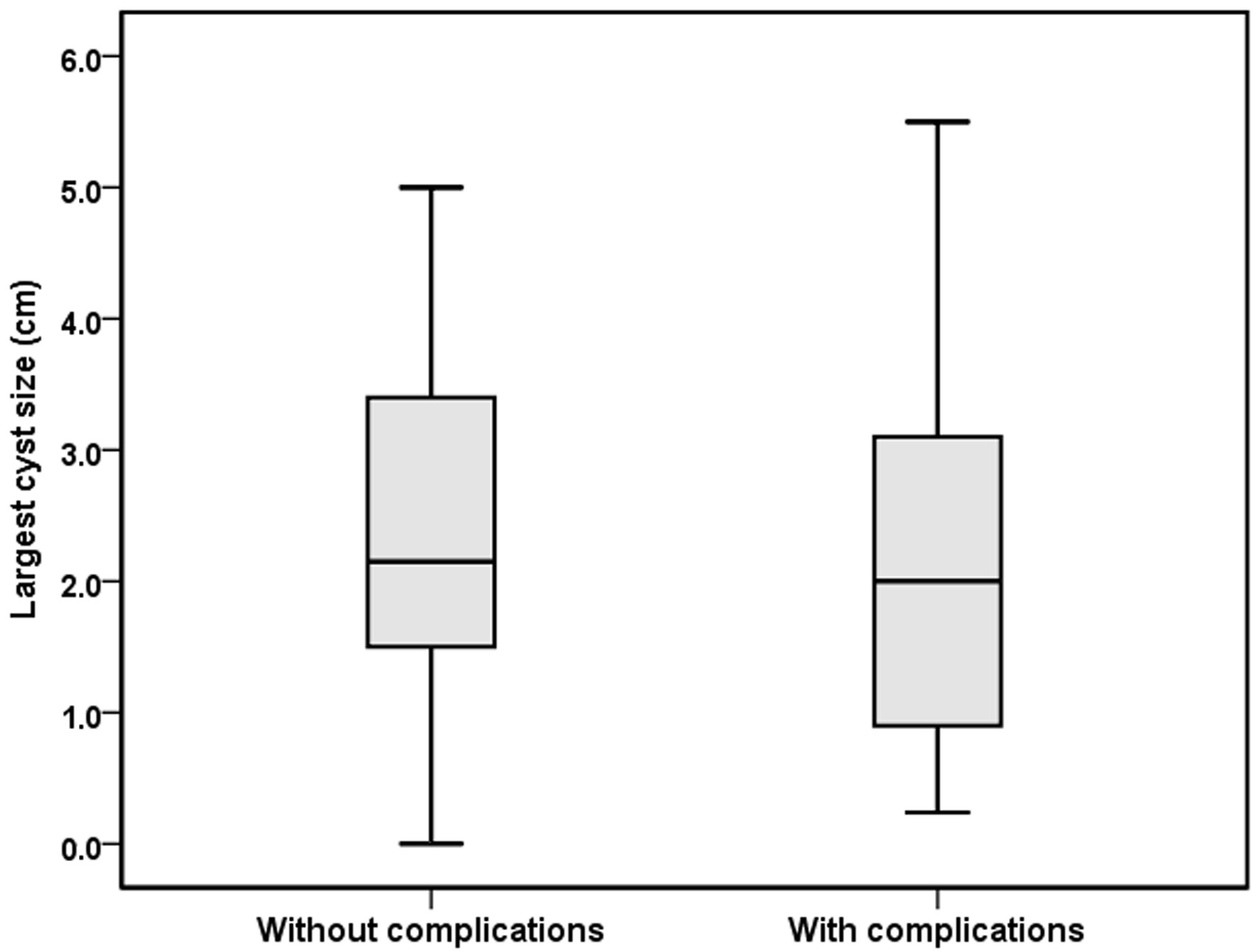
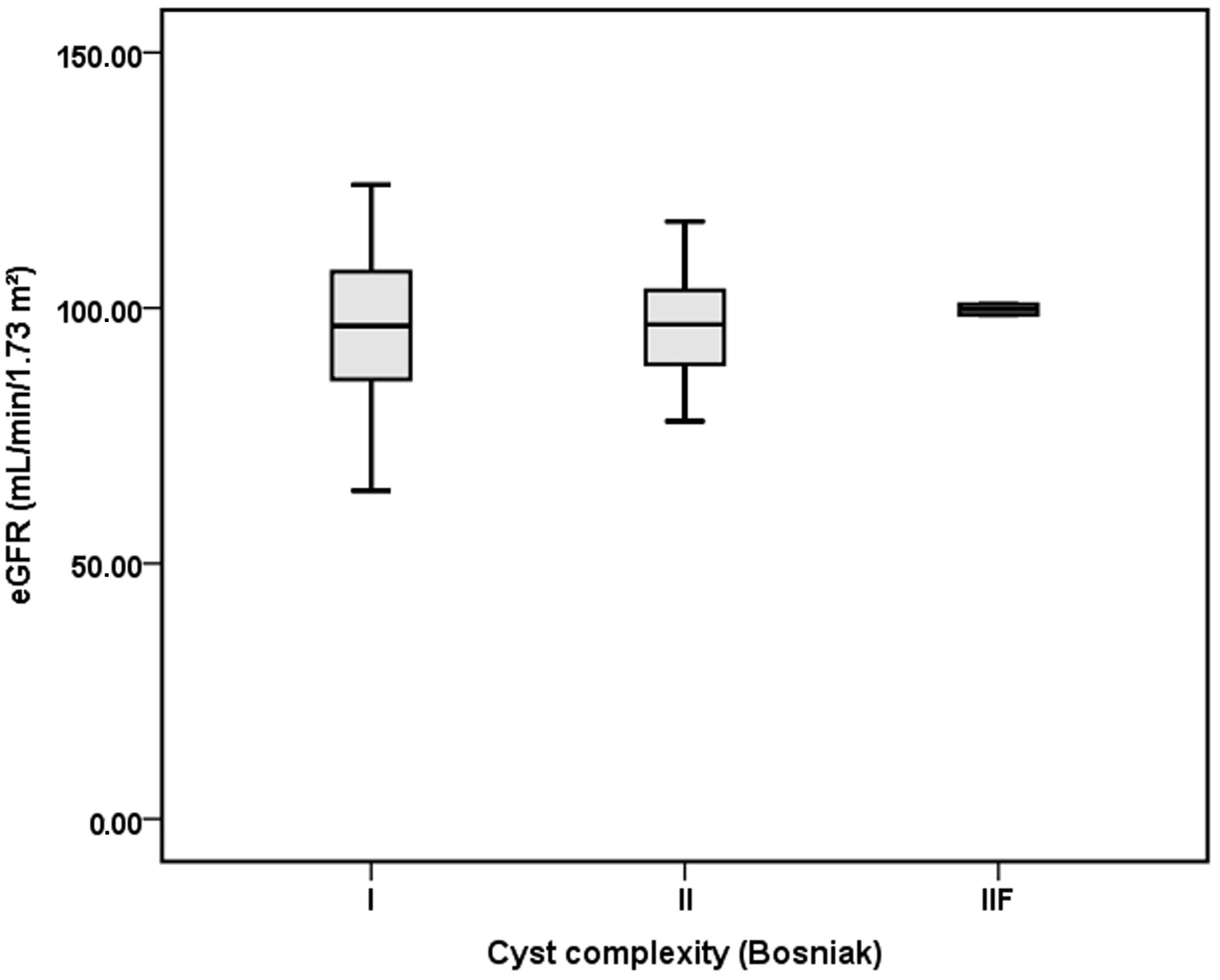
↓ Figure 5. Relationship between cyst complexity and estimated glomerular filtration rate (eGFR) in children with ADPKD. Box-and-whisker plot showing eGFR values according to Bosniak cyst complexity categories (II and IIF). ADPKD: autosomal dominant polycystic kidney disease.
Table
↓ Table 1. Demographic, Clinical, and Imaging Characteristics of Pediatric Patients With ADPKD
| Variable | With complications (n = 19) | Without complications (n = 48) | P-value |
|---|
| Continuous variables are presented as mean ± SD and categorical variables as number (%). P-values represent comparisons between patients with and without ADPKD-related complications. ADPKD: autosomal dominant polycystic kidney disease; eGFR: estimated glomerular filtration rate. |
| Female sex, n (%) | 13 (68.4%) | 22 (45.8%) | 0.008 |
| Age at evaluation (years), mean ± SD | 14.2 ± 5.2 | 10.9 ± 5.0 | 0.015 |
| Weight percentile | 52.1 | 58.4 | 0.413 |
| Kidney length Z-score, mean ± SD | 2.4 ± 2.7 | 2.2 ± 2.2 | 0.941 |
| Largest cyst diameter (cm), mean ± SD | 2.3 ± 1.5 | 2.5 ± 1.9 | 0.896 |
| Number of renal cysts ≥ 10, n (%) | 12/19 (63.2%) | 28/48 (58.3%) | 0.863 |
| Bosniak classification, n (%) | | | 0.785 |
| Bosniak I | 11/19 (57.9%) | 28/48 (58.3%) | |
| Bosniak II | 7/19 (36.8%) | 19/48 (39.6%) | |
| Bosniak IIF | 1/19 (5.3%) | 1/48 (2.1%) | |